
National Museum Galle
- Sri Lanka
Overview
If you’re planning a trip to Sri Lanka’s southern coast, you’ve probably heard of Galle, which has an old colonial fort, cobblestone streets, and ocean views.
But right inside that historic fort, there’s a quiet little place that doesn’t always get the spotlight: the National Museum Galle.
We know that it’s not flashy and crowded, but to be honest, that’s part of its charm.
Think of it like finding a hidden recipe in your grandma’s notebook, as in it’s simple, meaningful, and full of stories you didn’t know you were missing.
Therefore, whether you’re into history, culture, or just want to get rid of the beach headcount for an hour, this museum is worth a stop.
So, let’s walk through everything that you need to know before going there.
Highlights
About the National Museum Galle
The National Museum Galle isn’t just another collection of old stuff behind glass.
It’s a quiet keeper of stories, as in stories of trade, colonization, resistance, and daily life along the southern coast of Sri Lanka.
Unlike big-city museums that can feel overwhelming, this one feels like a living room full of family heirlooms.
Where each item has a purpose, a place, and a past.
In fact, you’ll find everything over here from ancient tools to colonial-era documents and from ceremonial masks to local pottery.
Anyway, what makes it special is how grounded it feels.
That is because there’s no loud audio tour or holograms. Just real objects, real history, and real people who cared enough to preserve them.
We know that it’s small, sure, but that’s not a weakness — it’s a strength.
Plus, you can actually see, touch (with your eyes, of course), and feel the weight of centuries without feeling in a hurry.
History of the National Museum Galle
This museum didn’t start as a museum at all.
In the 1800s, the building was originally the residence of the Dutch governor of Galle, who also served as the administrative headquarters of the Dutch East India Company.
However, after the British took over, they repurposed it as a government office.
It wasn’t until then that the building got its new life as a museum.
To be honest, it was a pretty humble beginning.
The first exhibits were just local donations — old weapons, coins, religious artifacts — things people thought were worth saving.
Over time, more items came in from nearby temples, villages, and even shipwrecks off the coast.
Whereas for decades, it stayed under the attention of others.
But that’s what gave it authenticity. It never tried to be popular among locals and tourists. In fact, it just kept quietly collecting the soul of the region.
Anyway, nowadays, it’s one of the oldest provincial museums in Sri Lanka, and it still holds that quiet dignity.
Trust us, you won’t find a plaque saying “World Heritage Treasure,” but if you look closely, you’ll see why it matters.
Where Is the National Museum Galle Located?
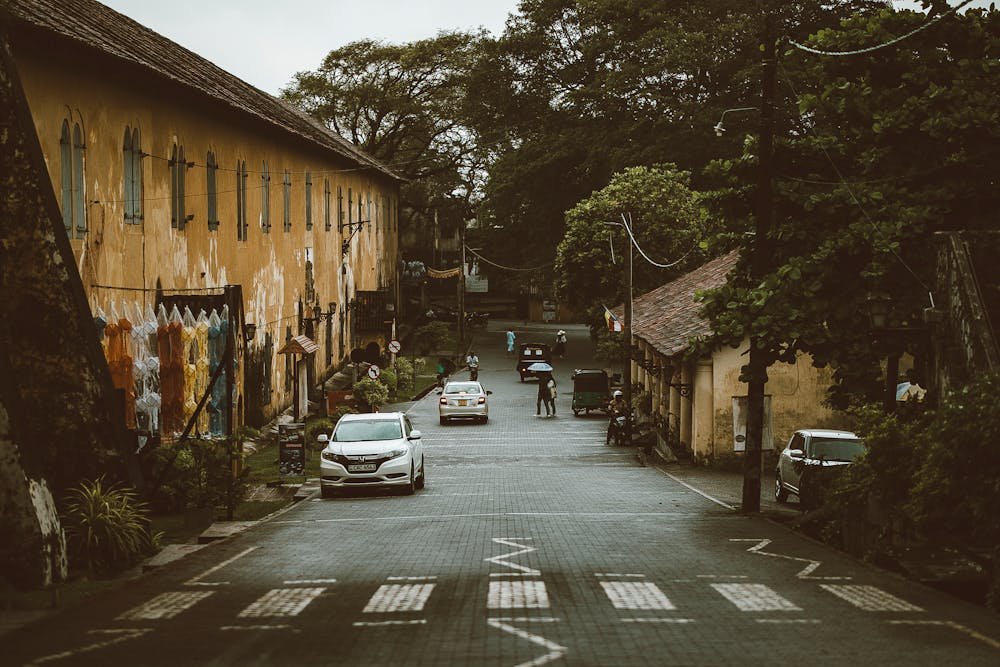
You’ll find the museum right inside the Galle Fort — that UNESCO-listed, walled city which feels like a paradise.
Specifically, it is located on the eastern side of the fort, between the old Dutch Reformed Church and the walls that overlook the Indian Ocean.
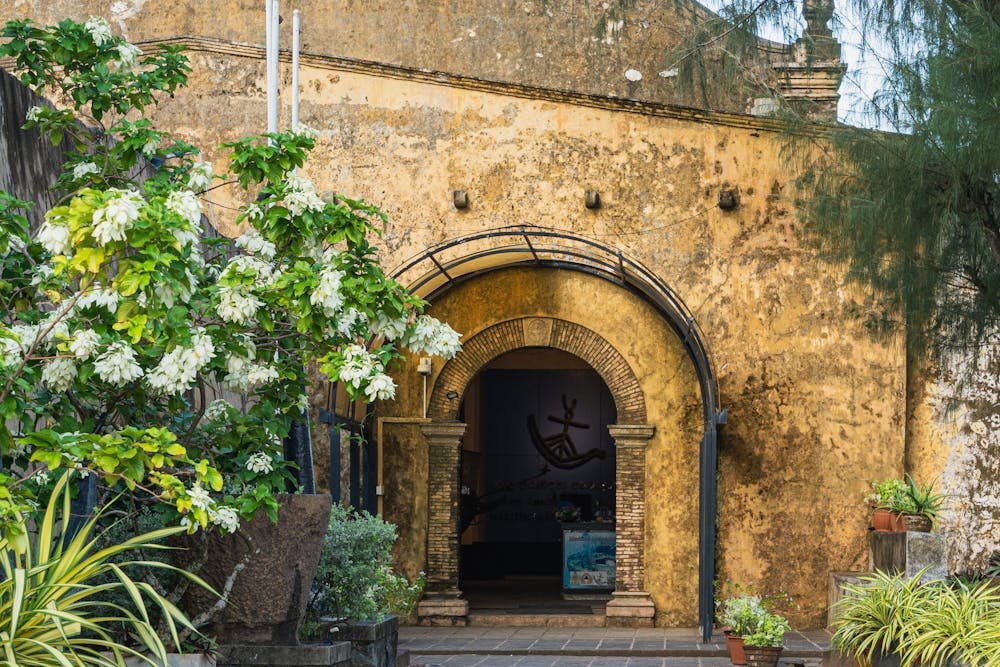
Anyway, if you’re walking around the fort, you’ll know you’re close when you see the tall, whitewashed colonial building with green shutters.
It’s not hard to miss as it’s one of the few buildings in the fort that still looks exactly as it did 200 years ago.
And here’s the nice part: once you’re inside the fort, everything is within walking distance.
Whereas you don’t need taxis or tuk-tuks. Just walk the narrow lanes, enjoy the sea breeze, and you will eventually get close to the museum almost by accident.
Top Exhibits at the National Museum Galle
Let’s talk about what’s actually inside.
The museum has three main galleries, each telling a different part of the story.
Speaking of which, the first one is all about archaeology.
Here, you’ll find stone tools from the prehistoric era — things like arrowheads and grinding stones — that were dug up from ancient burial sites around the region.
In fact, these aren’t just fancy artifacts; they’re proof of history.
Whereas they remind you that people have been living, working, and burying their dead right here for thousands of years.
With that, there’s the ethnographic section, which is probably the most colorful.
Here, you’ll see traditional costumes from southern Sri Lanka, handwoven textiles, wooden masks used in folk dances, and even farming tools that look like they were carved by hand — because they were.
Besides, some of the masks are eerie, some are funny, but all of them carry the spirit of rituals that are still alive today.
With that, the third gallery is where history gets personal.
That is because here, you’ll find colonial-era documents — letters written in Dutch and English, land deeds, and even court records from the 1700s.
Moreover, there’s also a small but powerful display of weapons: old muskets, swords used in local uprisings, and even a cannonball from a British naval attack.
Furthermore, you’ll also spot everyday items like porcelain tea sets, oil lamps, and handwritten ledgers from merchant families.
Trust us, these aren’t royal treasures. Whereas they’re the stuff of ordinary lives. And that’s what makes this museum so special.
As in it doesn’t focus on kings or battles. It focuses on people — the ones who cooked, traded, danced, and prayed here.
For that reason, it feels more real than any grand national museum ever could.
Opening Hours & Ticket Prices
Good news: this place is easy to fit into your day.
The museum opens at 9:00 a.m. and closes at 5:00 p.m. daily, except on Sundays, Mondays, and public holidays.
There’s no rush or long lines here. Therefore, you can show up anytime during those hours.
As for tickets, it’s pretty affordable — just 300 Sri Lankan rupees for foreign adults and 150 Sri Lankan Rupees for foreign kids.
That’s it, no hidden fees, digital tickets, or an app to download.
Just hand over a few coins, get a small receipt, and you’re in.
How to Reach the National Museum Galle
Getting here is simple, no matter how you’re traveling.
If you’re staying in Galle town, just hop on a tuk-tuk and ask to be dropped at the Galle Fort entrance. This is because most drivers are familiar with it.
From there, walk through the main gate — the one with the big arch and the cannons — and head east.
Whereas the museum is about a 10-minute walk along the fort’s inner walls.
On the other hand, if you’re coming from Colombo, take the train.
The Galle railway station is just outside the fort, and from there, it’s a short walk.
Moreover, buses also run regularly from Colombo, Matara, and other coastal towns.
Furthermore, if you’re driving, parking is available just outside the fort gates. However, it is better to avoid moving inside the fort itself.
That is because the streets are too narrow, and honestly, it’s better to leave the car behind and walk.
Best Time to Visit
When’s the best time to go?
Honestly, early morning is ideal.
Therefore, arrive around 9 a.m., and you’ll have the place mostly to yourself.
In fact, around that time, the light through the windows is soft, the air is cool, and the staff are still fresh and happy to chat if you have questions.
Plus, you’ll get rid of the heat because Sri Lanka gets warm, and the museum doesn’t have AC.
Conversely, late afternoon is also a good time to visit, especially if you want to combine your visit with sunset views from the fort walls.
So, is the National Museum Galle worth your time?
Well, absolutely. It’s not the biggest museum in Sri Lanka, nor does it have a gift shop. In a way, it doesn’t need to.
That is because what it has is honesty. Whereas it doesn’t try to impress you with lights or sound effects.
It just shows you what mattered to the people who lived here, such as their tools, their beliefs, their struggles, and their quiet joys.
In a way, it’s the kind of place that lingers in your memory, not because it was loud, but because it was real.
Therefore, if you’re looking for something meaningful — something that connects you to the soul of the place — this is it.
For that reason, take your time, sit on the wooden bench by the window, and think about who held them.
That is because there is no tour guide telling you what to feel. It is just you, the past, and a little quiet space to think.
Frequently Asked Questions
Q: What is special about the National Museum Galle?
It’s one of the oldest provincial museums in Sri Lanka and focuses on everyday life and local culture.
Q: What are the opening hours of the National Museum Galle?
It’s open daily from 9:00 a.m. to 5:00 p.m., except on every Monday, Sunday, and public holiday.
Q: How long does it take to explore the National Museum Galle?
Most visitors spend between 30 minutes to an hour, but you can take longer if you want to in order to get the details.
Q: Is photography allowed inside the National Museum Galle?
Yes, photography is allowed for personal use without the use of flashlights or tripods.
Get a Quote!
Your Expert Partners in
Travel Planning
Planning a vacation should feel exciting—not overwhelming. That’s where we come in. With a deep understanding of destinations, logistics, and what makes a trip truly special, our team of travel professionals handles every detail for you.