
Nallur Kandaswamy Kovil
- Sri Lanka
Overview
If you’ve ever gone through Jaffna and felt that quiet hum of vibe in the air, you’ve probably passed by Nallur Kandaswamy Kovil without even realising it.
To be honest, it’s not just another temple. It’s the heart of a community, a living piece of history, and one of the most vibrant spiritual spots in Sri Lanka’s north.
Therefore, whether you’re planning a trip, curious, or simply looking to learn more about Tamil Hindu culture, this guide is here to walk you through it.
So, if you are ready, let’s start with the big picture.
Overview of Nallur Kandaswamy Kovil
Nallur Kandaswamy Kovil is in the heart of Jaffna, a town that stays alive with deep cultural aspects and quiet resilience.
This kovil isn’t just a place of worship — it’s a symbol of identity, faith, and continuity.
Dedicated to Lord Murugan, also known as Kartikeya or Skanda, draws thousands of tourists and locals every year.
Now, what makes it so special?
Well, the scale of it is one of the reasons.
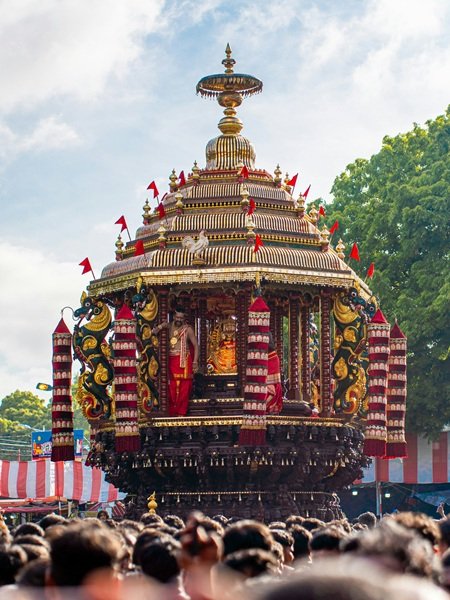
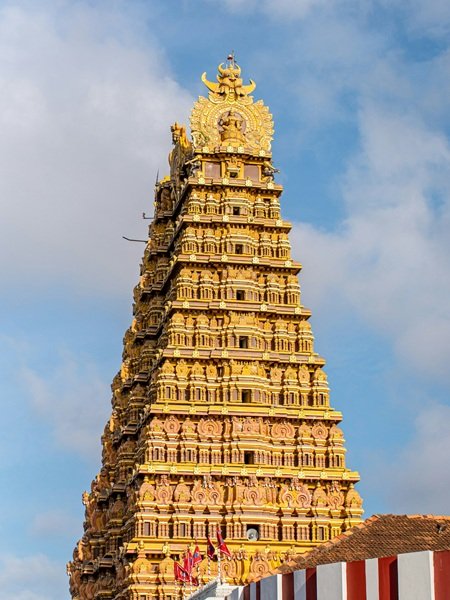
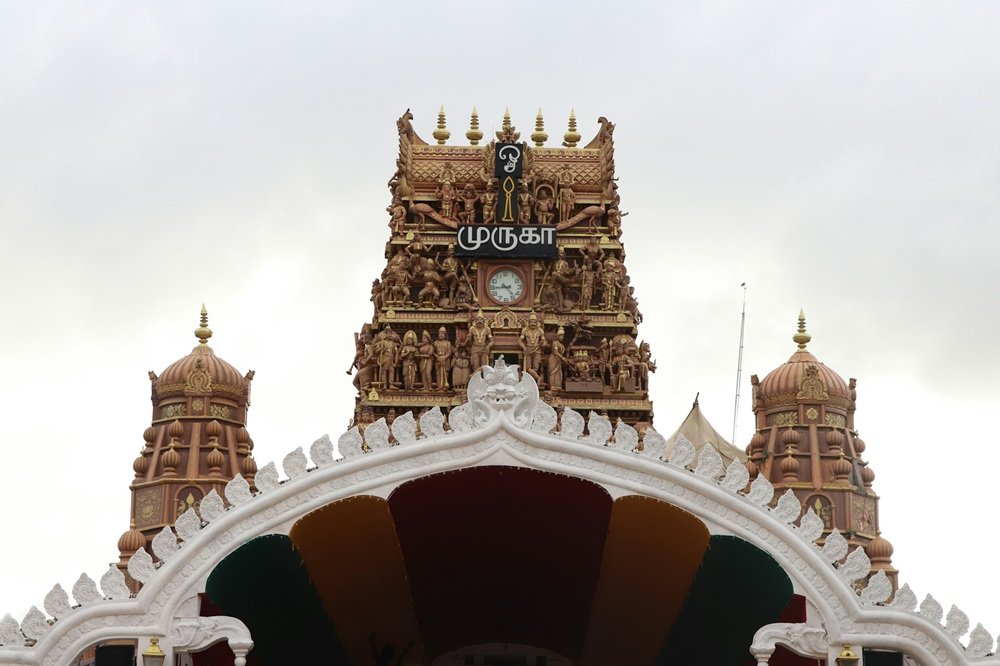
With its towering gopurams, golden chariots, and rows of oil lamps, it’s visually stunning.
But more than that, this kovil is full of chants, bells, incense, and the warmth of people coming together.
Where you won’t find a more welcoming or spiritual space in the north.
To be honest, it’s not just about rituals here. It’s about the connection between generations, between people, and between the believers of God.
Highlights
History of Nallur Kandaswamy Kovil
Now, let’s take a quick trip back in time.
The origins of this temple date back to the 17th century — specifically, around 1630.
Back then, this kovil was built by a minister of the Pandyan king, who sought to construct a grand kovil that would showcase both devotion and royal pride.
He chose Nallur, a quiet village just outside the capital, as the perfect spot.
The kovil was designed to honour Lord Murugan, who was believed to be the protector of the kingdom.
With that, over the years, it became more than a royal project as it became the spiritual centre for the entire Tamil community.
Of course, history hasn’t always been smooth. The Kovil faced destruction during colonial times, especially under Portuguese rule, when many Hindu temples were targeted.
But here’s the beautiful part — the community never gave up.
Even when the temple was reduced to rubble, people kept the faith alive in secret.
Whereas they’d gather quietly, chant prayers, and pass down stories.
With that, when the Dutch took over later, they were more tolerant, and the kovil slowly came back to life.
Speaking of which, by the 19th century, it was fully restored. And became even grander than before.
In fact, the structure wasn’t just about bricks and mortar. It was about memory, resilience, and love.
So, that’s what gives this kovil its soul.
Nallur Kandaswamy Kovil Timings (Daily Schedule)
If you’re planning a visit, timing your travel is quite important.
Well, obviously, we are not suggesting that you skip rush hours, but rather to get the best experience.
Speaking of which, the kovil opens early, at 4:15 a.m., 7:30 a.m., and 3:00 p.m., when the bell rings.
Note: Each day has a different opening schedule. Therefore, it is wise to refer to the schedule before going.
Opening Schedule
- Thursday 4:15–5:15 am / 7:30 am–12 pm / 3–6:15 pm
- Friday 4:15 am–12 pm / 3–6:15 pm
- Saturday 4:15–5:15 am / 7:30 am–12 pm / 3–6:15 pm
- Sunday 4:15–5:15 am / 7:30 am–12 pm / 3–6:15 pm
- Monday 4:15–5:15 am / 7:30 am–12 pm / 3–6:15 pm
- Tuesday 4:15–5:15 am / 7:30 am–12 pm / 3–6:15 pm
- Wednesday 4:15–5:15 am / 7:30 am–12 pm / 3–6:15 pm
Anyway, the morning rituals begin with the first bell as the cleansing of the deities, the offering of flowers and the soft hum of prayers start.
So, if you’re up for it, show up at that time, where it gives you a rare, peaceful moment.
With that, the temple stays open until about 5.15 a.m., then closes briefly for a rest.
It reopens in the morning and remains open until 12 p.m.
Finally, they once again open the kovil at around 3 p.m., when the evening aarti begins, which is a breathtaking moment with lamps, chants, and swirling incense.
Trust us, it’s the most popular time to visit and get a sense of the kovil.
In fact, the whole kovil glows under the golden light of oil lamps, and the energy is quite unique.
For that reason, if you want to avoid the crowd, go early in the morning.
On the other hand, if you want to feel the full heartbeat of the kovil, stick around for the evening.
Whereas either way, you’ll leave with a quiet sense of peace.
Dress Code at Nallur Kandaswamy Kovil
When it comes to what to wear, simplicity and respect go a long way.
There’s no need for fancy outfits, but covering up is important.
Specifically, for men, shorts and tank tops aren’t allowed.
Instead, go for long pants and a shirt — something charming, comfortable, and neat.
On the other hand, women should avoid short skirts or sleeveless tops.
In fact, a saree or salwar kameez is traditional and appreciated, but even a long dress or leggings with a tunic works perfectly fine.
Anyway, the key is to cover your shoulders and knees.
Plus, shoes must be removed before entering the main temple area, where there are plenty of racks near the entrance, so no need to carry them around.
And while you’re at it, try to keep jewellery minimal. This is because it’s not about showing off — it’s about being present.
To be honest, most locals won’t stop you if you’re slightly off, but showing that you’ve made an effort means a lot.
In a way, it tells the community that you’re not just a visitor — you’re a guest who respects their space.
Major Festivals at Nallur Kandaswamy Kovil
Now, let’s talk about the big ones, which are the festivals that turn this kovil into a celebration of colour, sound, and joy.
As a matter of fact, the biggest of them all is the Nallur Festival, also called Nallur Kandaswamy Kovil Festival.
It lasts for 25 days, usually falling in August or early September.
During this time, the whole town lights up. Whereas the streets are decorated with lanterns and hundreds of thousands of people come from all over Sri Lanka — and even from abroad.
Anyway, the highlight is the chariot procession. A massive, ornate wooden chariot, pulled by hundreds of devotees, that carries the deity through the main streets.
It’s loud, joyful and chaotic in the best possible way.
Plus, you’ll hear drums, see dancers, smell incense and fried snacks, and feel the rhythm of the beat in your chest.
But the festival isn’t the only big event.
There’s also Thaipusam, celebrated in January or February, when devotees carry kavadis, which are heavy, decorated frames, as offerings.
Some even pierce their skin as acts of penance and as a sign of gratitude, which is intense but deeply moving.
Then there’s Vaikasi Visakam, the birthday of Lord Murugan, which brings its own wave of prayers and special rituals.
Trust us, each festival has its own unique vibe and meaning, but they all share one thing in common — they bring people together.
Therefore, whether you’re there to worship or just to watch, you’ll feel the warmth.
Best Time to Visit Nallur Kandaswamy Kovil
So when’s the best time to go?
Honestly, it depends on what you’re looking for.
For instance, if you want a calm, quiet experience and a chance to truly immerse yourself in the vibe, consider visiting between October and March.
That is because during this time, the weather is perfect, the skies are clearer, and the crowd count is relatively low.
Plus, that’s when you can roam through the courtyards without bumping into ten other people.
In addition to that, the kovil looks especially beautiful in the morning light.
On the other hand, if you want to experience the Kovil at its busiest time, plan your trip around the festival season.
However, be warned — accommodations fill up quickly, traffic becomes heavy, and everything moves more slowly.
For that reason, if you’re visiting during the festival, book early. And if you have time, consider coming just before or right after the main events.
However, you’ll still feel the energy, but with a little more breathing room. And don’t forget — Jaffna itself is worth exploring.
So make a day of it. Grab a spicy vadai, sip on fresh coconut water, and just take your time.
Nallur Kandaswamy Kovil isn’t just a tourist spot— it’s a feeling.
Whereas it’s the sound of bells echoing through ancient halls, the scent of sandalwood mixing with the sea breeze, and it’s the way that strangers smile at each other without saying a word.
Therefore, whether you’re spiritual, curious, or just passing through, this place welcomes you.
There’s no pressure to believe anything. Just be present, listen, observe and feel.
For that reason, if you’re lucky, you’ll leave with a quieter sense of connection than photos.
So, that’s the magic of Nallur.
Frequently Asked Questions
Q: What is the dress code for Nallur Kandaswamy Kovil?
The main thing is to cover your shoulders and knees. Therefore, men can wear long pants and a shirt, while women can wear a saree or a salwar kameez.
Q: What are the opening and closing times of Nallur Kovil?
The kovil opens at around 4 a.m. and closes at 3 p.m. between intervals. However, it is wise to refer to the above-mentioned schedule, as the time can change daily.
Q: When is the Nallur Festival celebrated?
The Nallur Festival takes place over 25 days, usually in August or early September.
Q: Why is Nallur Kandaswamy Kovil famous?
It’s one of the most important Murugan temples in the world, known for its grand architecture, deep history, and the massive 25-day festival that draws thousands of devotees each year.
Get a Quote!
Your Expert Partners in
Travel Planning
Planning a vacation should feel exciting—not overwhelming. That’s where we come in. With a deep understanding of destinations, logistics, and what makes a trip truly special, our team of travel professionals handles every detail for you.